
Ordered by Year, Make and Model and Still Got the Wrong Part? Check These 5 Things Before You Order
October 25, 2026You did it right. You typed in your year, make and model. The site said the part fits your car. Then the part showed up, and it did not fit.
This is the top complaint in online auto parts reviews. It shows up for almost every big store.
The reason is plain. Year, make and model is not the whole story. Two cars can look the same and still use parts that are not the same.
Here are 5 checks that catch most of these errors before you pay.
1. Check your trim
A base car and a top trim of the same car often use parts that are not the same.
Brake parts are a good case. One trim may use a small brake rotor. A sport trim may use a big one. The store page may say the part fits your model. It may not say which trim it fits.
You can find your trim on the sticker on the driver door. You can also find it on your old window sticker or your car papers.
If the store page does not list your trim, that is a red flag. Do not guess.
2. Check your engine size
Many parts change when the engine changes. This is true even for the same car and the same year.
Starters, belts, axles and sensors can all be not the same. A 4-cylinder car may need one part. A V6 or V8 car may need a part that is not the same.
Your engine size is on the door sticker and under the hood. Match it to the store page, word for word.
Be careful if the page says the part is "universal." That word can hide a bad fit.
3. Check your build date
Car makers change parts in the middle of a year. So an early car and a late car from the same year may need parts that are not the same.
Look for notes like "up to June 2025" or "from July 2025." Then check the build date on your driver door sticker. It will show a month and a year.
If your date is close to the change date, check the part number first. This one step stops a lot of returns.
4. Check the number on your old part
This is the best check of all. It takes just two minutes.
Look at your old part. It may have a stamp, a sticker, or a tag with a number on it. Search for that exact number. Then match it to the number on the store page.
Do not trust the title by itself. Do not trust the photo by itself. The title, the photo and the part number should all match.
Keep your old part until the new part is on the car and works well. If you have to send the new part back, the old part will help you prove it was wrong.
5. Match the photo to your part
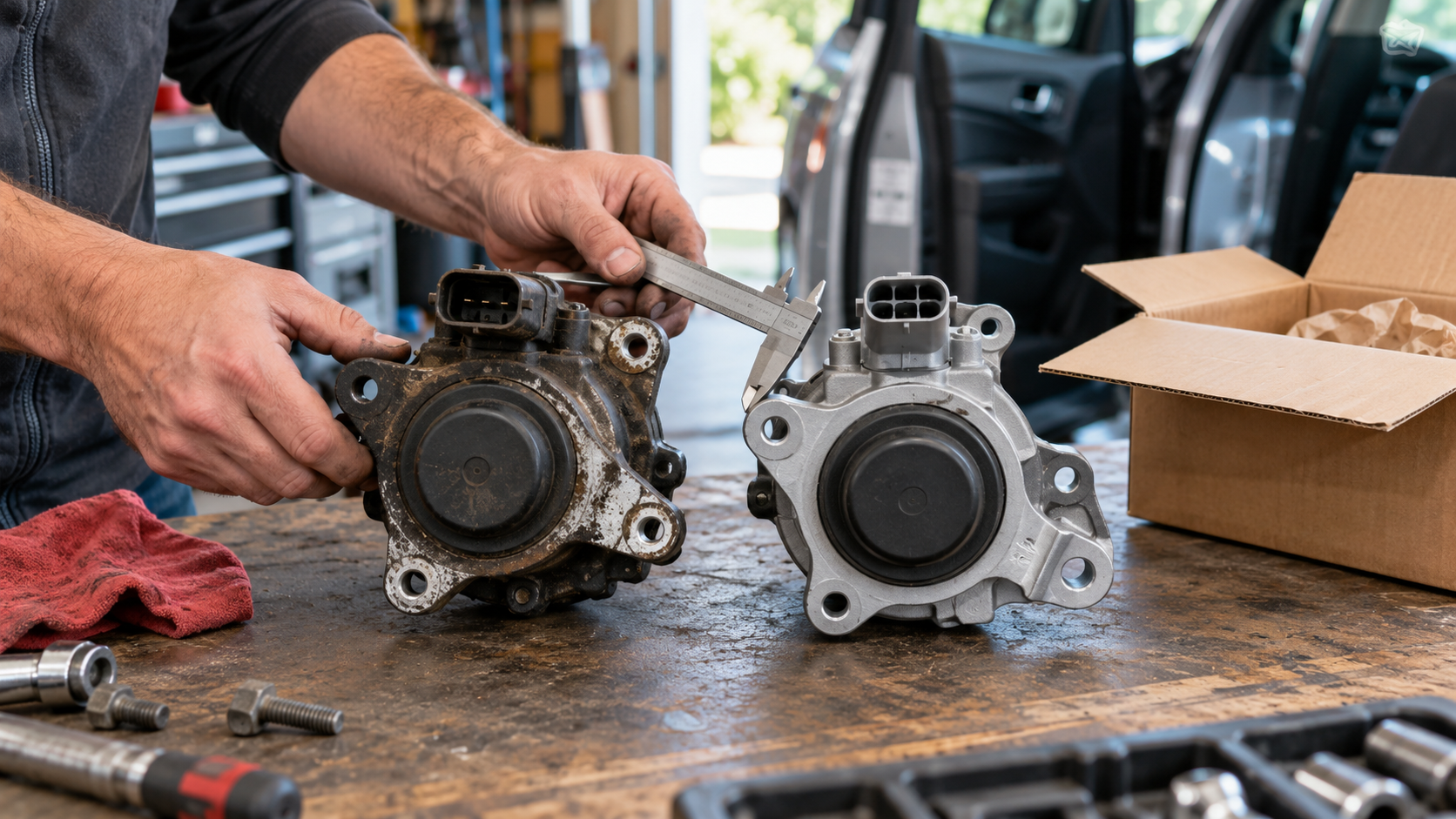
Put the store photos next to your old part. You can also use a clear photo of your part.
Check each of these points:
- Shape and size
- How many bolt holes there are, and where they are
- Plug shape and pin count, for parts with wires
- Which side it fits, left or right, front or back
A part that is just a bit too short will not work. A part with a plug in the wrong spot will not work. It does not matter what the fit tool said.
One more tip: save a screen shot of the store page. Save the part number and the claim that it fits. If the store sent the wrong part, that screen shot is your proof. It can help you avoid return shipping costs.
Quick list to use before you buy
- Trim matches
- Engine size matches
- Build date falls in the listed range
- Part number matches your old part
- Photos match holes, plugs and side
If all 5 checks pass, your odds are much better. You are far more apt to get the right part the first time. You also avoid the worst part of this problem: a car torn apart in the drive while you wait for a return.
Need a part now? Look at the parts we list at AutoPartsDrop. Use this list for any part, from any store, before you order.